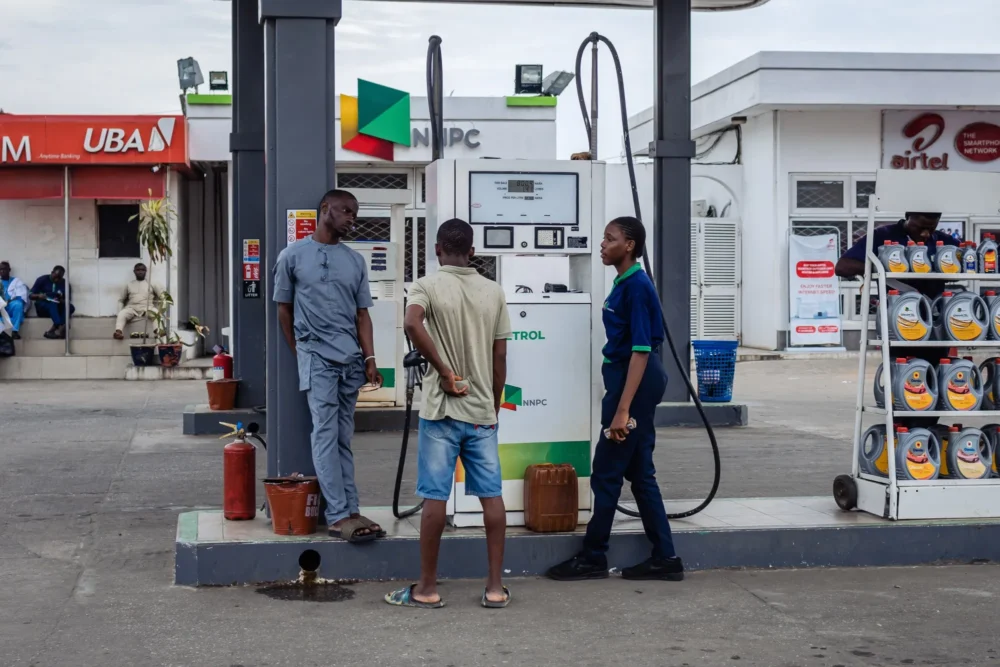
Nigeria is experiencing a sharp rise in fuel prices—even after launching the Dangote Refinery, the largest in Africa.
Fuel costs have increased by about 65%, one of the steepest hikes on the continent. The refinery was expected to reduce reliance on imports and stabilize prices, but the reality is more complicated. Nigeria still depends heavily on foreign crude oil because much of its own production is already committed to repaying debts to international partners.
The situation has worsened due to global factors. Ongoing tensions in the Middle East have disrupted supply chains and pushed oil prices above $100 per barrel, adding more pressure on local markets.
For ordinary Nigerians, the impact is immediate:
- Transport fares have gone up
- Food prices have surged
- Businesses face higher operating costs
Many households and companies rely on fuel-powered generators due to unstable electricity, making them especially vulnerable to rising fuel prices.
Despite the hardship, the government has decided not to bring back fuel subsidies. Instead, it is focusing on long-term economic reforms, while offering limited short-term support.
Overall, the situation shows how both global events and structural challenges at home continue to shape Nigeria’s economy.
Source: Africa News