


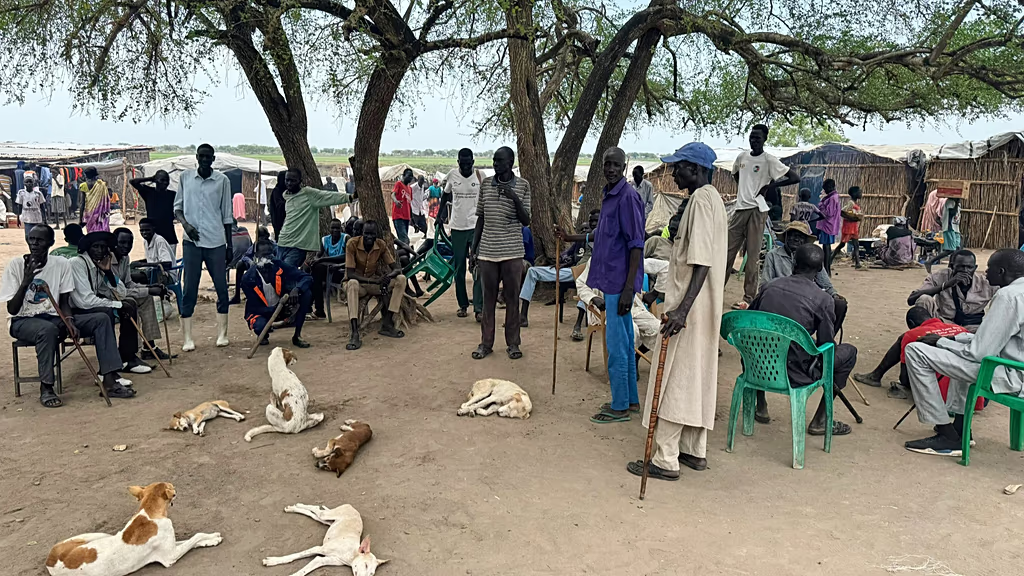
In South Sudan, civilians fleeing violence say they were left without lifesaving aid after authorities blocked humanitarian access to a remote village.
Thousands of displaced people gathered in Nyatim, a swamp-surrounded area where conditions are extremely harsh. With no proper food or clean water, many were forced to survive by eating leaves and roots. Witnesses and aid groups report that dozens of people have died, some likely from starvation.
Organizations like Doctors Without Borders and the World Food Programme say they repeatedly asked for permission to deliver aid but were denied by both local and national authorities.
This crisis is linked to renewed tensions between President Salva Kiir and his rival Riek Machar. Their conflict has fueled violence in regions like Jonglei state, forcing civilians to flee into isolated area like Nyatim.
Each side blames the other. Officials claim aid could be misused or diverted, while opposition figures accuse the government of deliberately blocking assistance to areas seen as supportive of rivals. In reality, civilians are caught in the middle.
Because roads and rivers are unsafe, aid agencies have turned to airdrops in nearby areas—but even that comes with risks, as armed groups move toward aid distribution points.
In simple terms, this is a humanitarian crisis where politics and conflict are preventing help from reaching people who desperately need it. Many families now face a terrible choice: stay and risk starvation, or return to destroyed by war.
Source: AA


