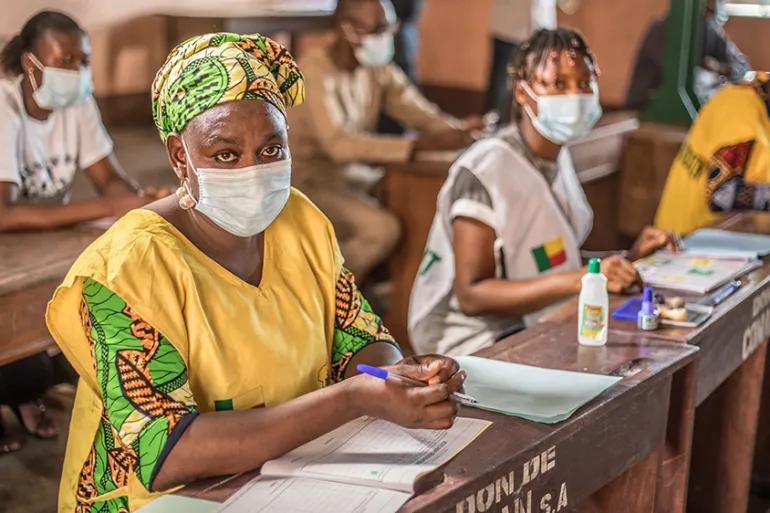
Benin’s presidential election unfolded in a generally calm atmosphere, according to electoral commission chief Sacca Lafia, although civil society observers reported around 100 irregular incidents, including early poll openings and concerns over ballot handling.
Despite nearly eight million registered voters, turnout appeared relatively low in several polling stations across Cotonou, reflecting a lack of enthusiasm in what many perceive as a race with limited competition.
The ruling coalition’s candidate, Romuald Wadagni, is widely seen as the frontrunner against opposition figure Paul Hounkpe, whose campaign has remained notably subdued. The absence of a major opposition contender has raised concerns about political inclusiveness and electoral competitiveness.
Under President Patrice Talon, Benin has experienced significant economic growth, with GDP reportedly doubling and infrastructure development accelerating. However, this progress has not been evenly distributed, as poverty levels remain above 30 percent, fueling public frustration over inequality.
Security challenges are also mounting, particularly in northern regions where jihadist violence has begun to spread, adding pressure to an already complex national landscape.
Younger voters are increasingly vocal about the need for reforms. Citizens like Landry Sodogandji have called for stronger youth engagement and more inclusive social policies, reflecting broader demands for cohesion and equitable development.
The next president will govern under revised constitutional provisions extending presidential terms to seven years, shaping Benin’s political and economic direction well into the next decade.
Source: AfricaNews