


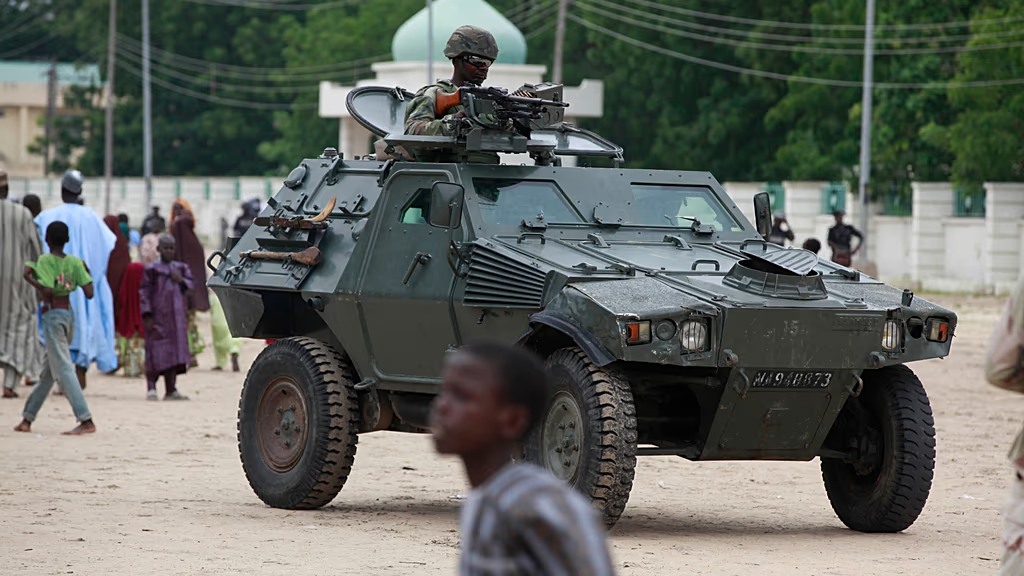
Airstrikes carried out on Saturday in Nigeria have resulted in sharply conflicting casualty figures, reflecting the opacity surrounding ongoing military operations. Amnesty International reported that more than 100 people were killed and at least 35 seriously wounded, while a local community leader suggested the total number of dead and injured could reach 200. The Nigerian military has yet to issue an official response.
The incident comes amid Nigeria’s long-running battle against insurgent groups, a conflict that began following the 2009 uprising led by Boko Haram. Over the years, the crisis has evolved with the rise of splinter factions such as Islamic State West Africa Province, further intensifying instability in the country’s northeast.
While violence remains concentrated in rural northeastern regions, security threats have increasingly spread westward. Armed groups, including jihadist elements and organized criminal networks commonly referred to as “bandits,” have expanded their operations, targeting villages, farmers, and artisanal miners through raids and extortion.
Analysts warn that the overlapping presence of insurgency and criminal violence is complicating efforts to restore security, raising concerns over the country’s ability to contain the crisis as it continues to evolve geographically and strategically.
Source: AfricaNews


